Public Testing Now Open for GNOME 50 Alpha: Embracing a Wayland-Only Future
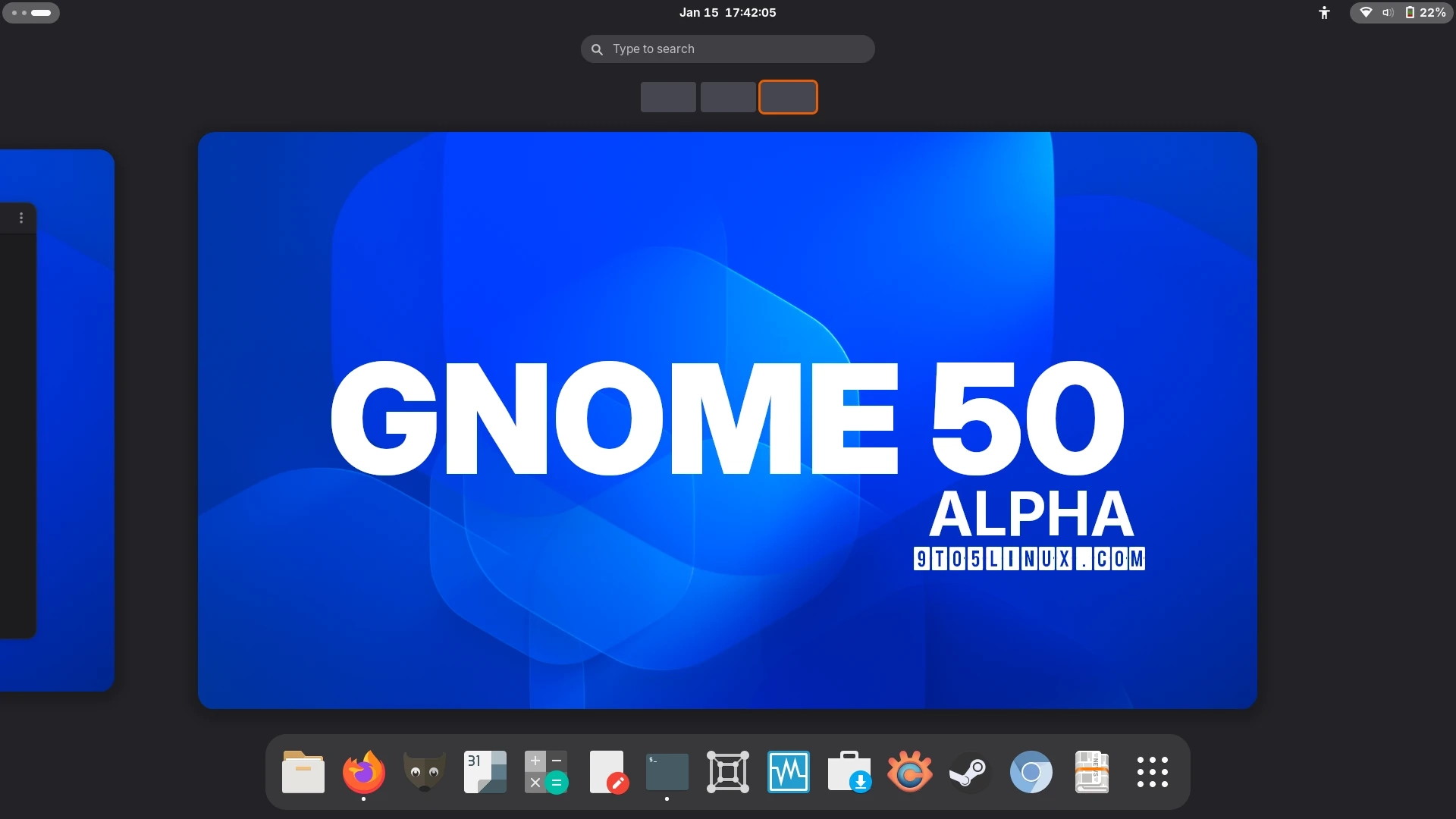
The GNOME Project has announced the release of the alpha version of the GNOME 50 desktop environment, now available for public testing. This release marks a significant transition as the GNOME 50 series will be strictly Wayland-only, removing support for X11 in numerous core components. This shift was initially anticipated in the GNOME 49 release.
Among the notable features in this alpha version is the introduction of session save/restore functionality, a new gnome-headless-session@<username>.service for easier initiation of headless graphical sessions, and the integration of the "boot_display" sysfs attribute from the Linux kernel 6.18 LTS into GDM. The updated attribute replaces the older “boot_vga” and allows better identification of the primary GPU, especially for modern AMD graphics that lack VGA support.
Mutter 50 alpha includes enhancements like better handling of tiled monitors and sticky keys, native scaling support for Xwayland, and improvements for tablet devices and secondary GPU performance. It also supports various pixel formats and external window constraints.
The Nautilus file manager has been updated with support for multiple file type searches, improved thumbnail loading, a revamped batch rename tool, and optimized memory usage. Additionally, the GNOME Control Center has seen numerous enhancements, including better color calibration options and new accessibility features.
The web browser, Epiphany, now allows users to hide cookie banners, has received a fresh icon for search bar options, and improvements to the Security dialog. Other applications like Papers, GNOME Calendar, GNOME Sudoku, and GNOME Maps also saw significant functional upgrades.
Improved functionalities are highlighted in GNOME System Monitor, GNOME Clocks, and GNOME Characters, which all received various updates to enhance user experience. Furthermore, GNOME 50 aims to enhance the handling of eager suspension after resume, particularly for NVIDIA hardware.
A complete changelog of changes introduced in this alpha version can be found on the release announcement page. The final release is scheduled for March 18, 2026, with beta and release candidate versions to be available for public testing in early February and March, respectively. Users eager to test the alpha can download the GNOME OS install image from the announcement page, although they should be aware that it may contain unfinished features and bugs.