Introducing Arduino’s New AI Single-Board Computer: Ubuntu-Powered Innovation
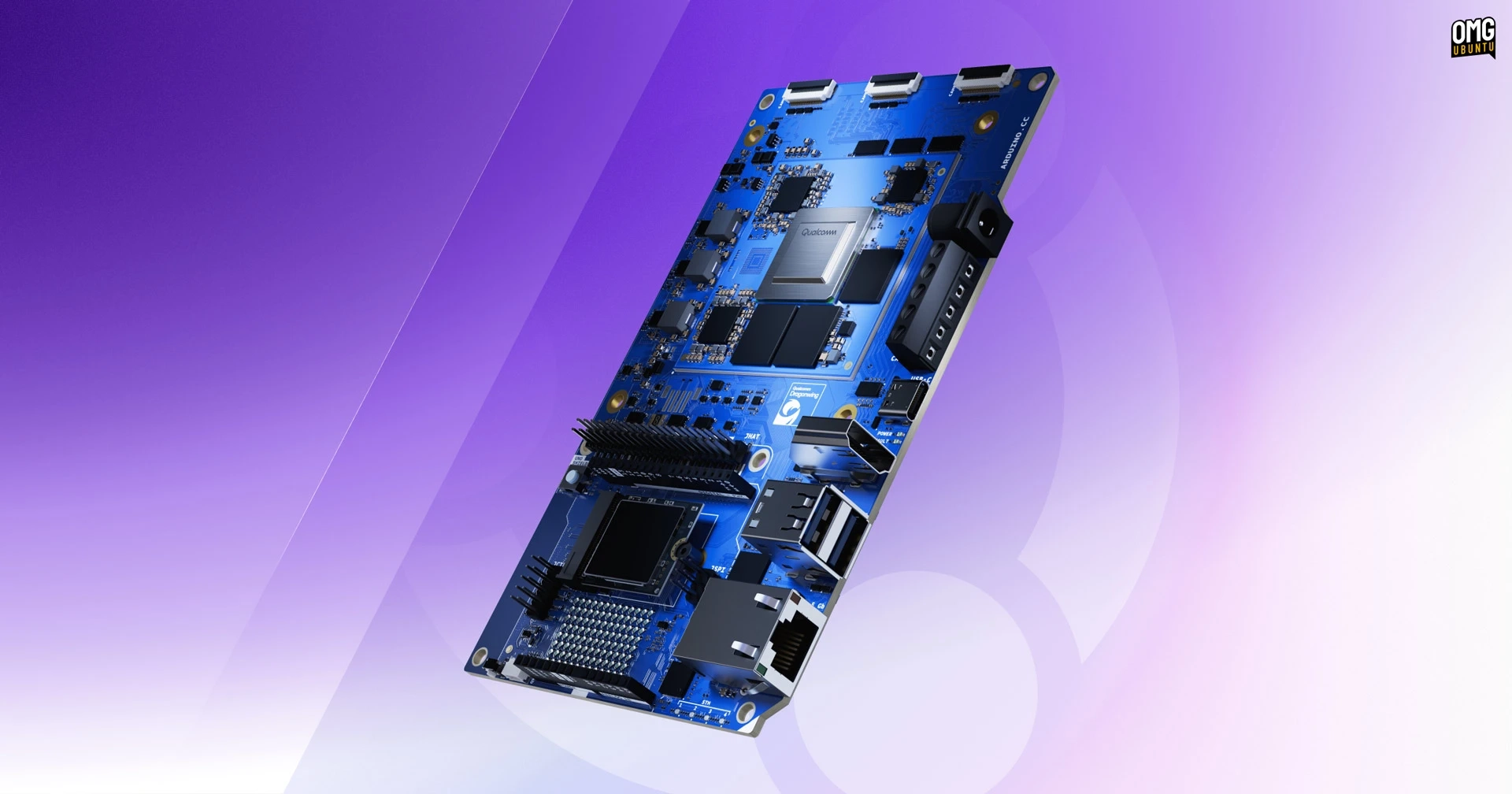
Arduino has introduced the VENTUNO Q, a new single-board computer designed specifically to handle AI workloads at the edge, such as in robotics, industrial automation, and computer vision. Unlike typical boards aimed at hobbyists, this advanced device is powered by Qualcomm’s Dragonwing IQ-8275 processor that combines CPU, GPU, and NPU capabilities, delivering 40 TOPS of AI computing power for on-device processing of large language models and computer vision tasks.
The VENTUNO Q is equipped with 16GB of LPDDR5 RAM and 64GB of eMMC storage, with an M.2 slot available for NVMe expansion. In terms of connectivity, it features Wi-Fi 6, Bluetooth 5.3, and 2.5Gb Ethernet. The software package includes the Arduino App Lab, which facilitates development using Arduino sketches, Python, and pre-built AI model integrations, allowing users to quickly deploy AI solutions with ease. Alternatively, traditional Linux tools like VS Code and Docker can be used, as App Lab is optional. Additionally, the board supports compatibility with Arduino UNO shields, Raspberry Pi HATs, and Modulino nodes through a standard 40-pin GPIO header.
Notably, Ubuntu serves as the operating system for the VENTUNO Q. Canonical has been proactive in positioning Ubuntu as a key player in edge computing and embedded systems, having previously launched certified images of Ubuntu 24.04 for Qualcomm’s Dragonwing IoT devices. The collaboration with Arduino extends Ubuntu’s reach into industrial AI applications, providing a stable software foundation that ensures long-term support and security.
This announcement coincides with the VENTUNO Q’s showcase at Embedded World 2026, taking place in Germany from March 10 to 12. Although there is no set release date or pricing information available yet, interested users can sign up for availability alerts on the Arduino website.
For further information, visit the Arduino website.