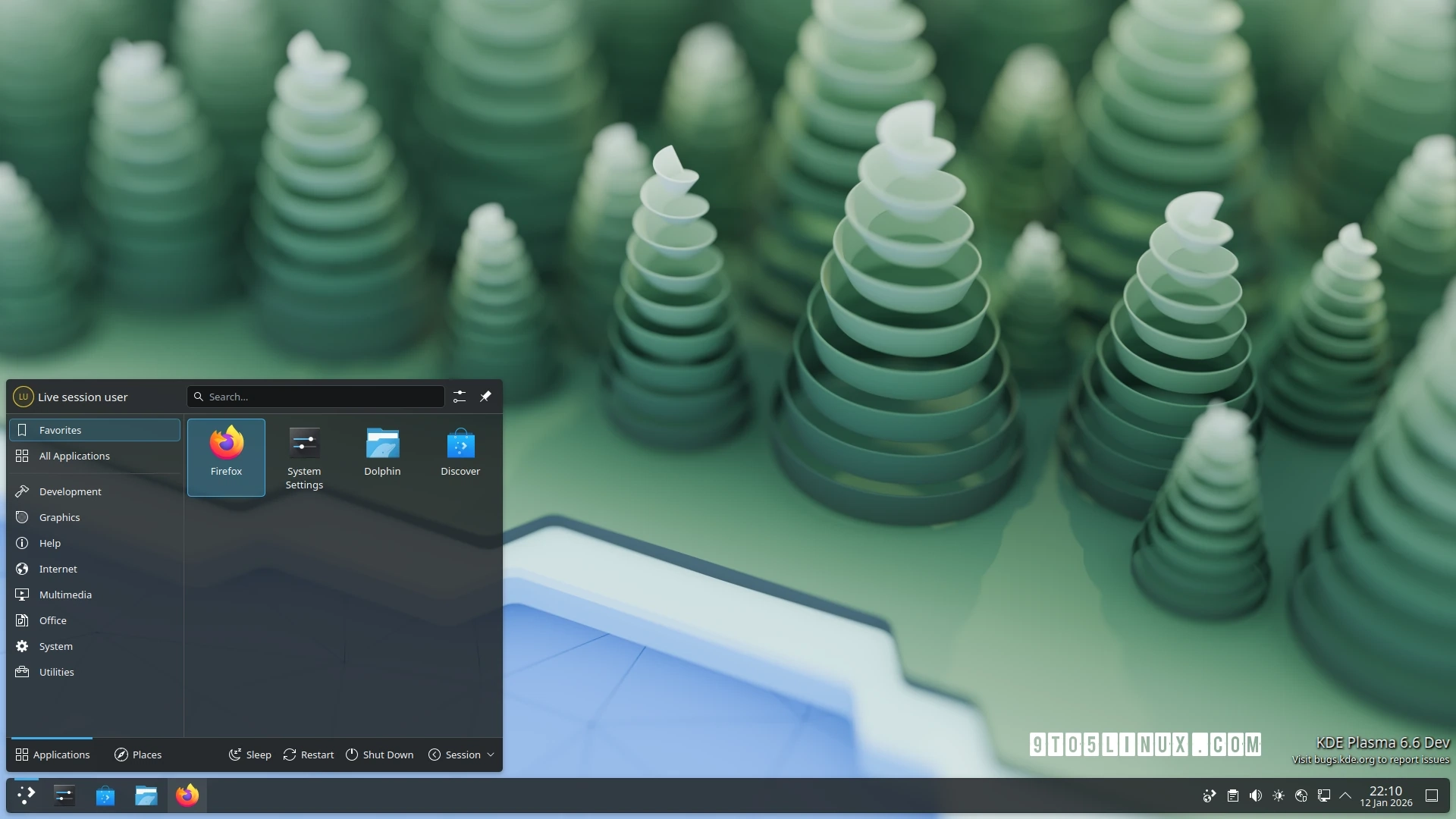
The KDE project has announced the release of KDE Plasma 6.6, marking it as the latest iteration of their popular desktop environment for GNU/Linux systems. This version comes with significant advancements, including the introduction of a new display manager called "Plasma Login Manager," which has the potential to replace longstanding login managers like SDDM. This new feature is expected to be integrated into distributions that utilize KDE Plasma, such as the forthcoming Fedora Linux 44 and others like CachyOS and EndeavourOS. However, it is important to note that the Plasma Login Manager requires systemd, so it will not function in systemd-free distributions.
Additionally, KDE Plasma 6.6 boasts features aimed at enhancing user experience. Users can now turn their current Plasma settings into a global theme and modify the screen’s visual “sharpness” on distributions running Linux kernel 6.19. New OCR capabilities in the Spectacle screenshot tool and the introduction of a USB portal for sandboxed apps are also notable improvements. The new release allows for selective exclusion of windows during screen recordings, provides XRandr emulation support in KWin for better compatibility with XWayland applications, and features support for color pipelines via per-DRM-plane settings.
Security enhancements are also prominent in this update. Users can store Wi-Fi network passwords more securely, improving access and security measures. Cross-app activation on Wayland has been refined, and the Networks widget now includes a QR code functionality for easier Wi-Fi connections. For customization, users can adjust the Application Dashboard widget’s color scheme, though a dark theme remains the default.
Other significant updates involve improved battery management for laptops, enhanced colorblind support, advancements in screen mirroring, and the addition of custom screen modes in Wayland sessions. A new "Slow Keys" feature was introduced to enhance accessibility, alongside increased compatibility with OpenBSD and additional features supporting the oo7 Secret Service provider.
Finally, KDE Plasma 6.6 incorporates a workaround for running Windows games with HDR support on Wine or Proton, along with numerous enhancements to the System Settings app and default Plasma Panel widgets. This latest version will soon be available in various GNU/Linux distributions such as KDE neon, Arch Linux, and openSUSE Tumbleweed.
For further details, you can check the release announcement page.