GNU Octave 11: The Latest Release of the Open-Source Scientific Programming Language
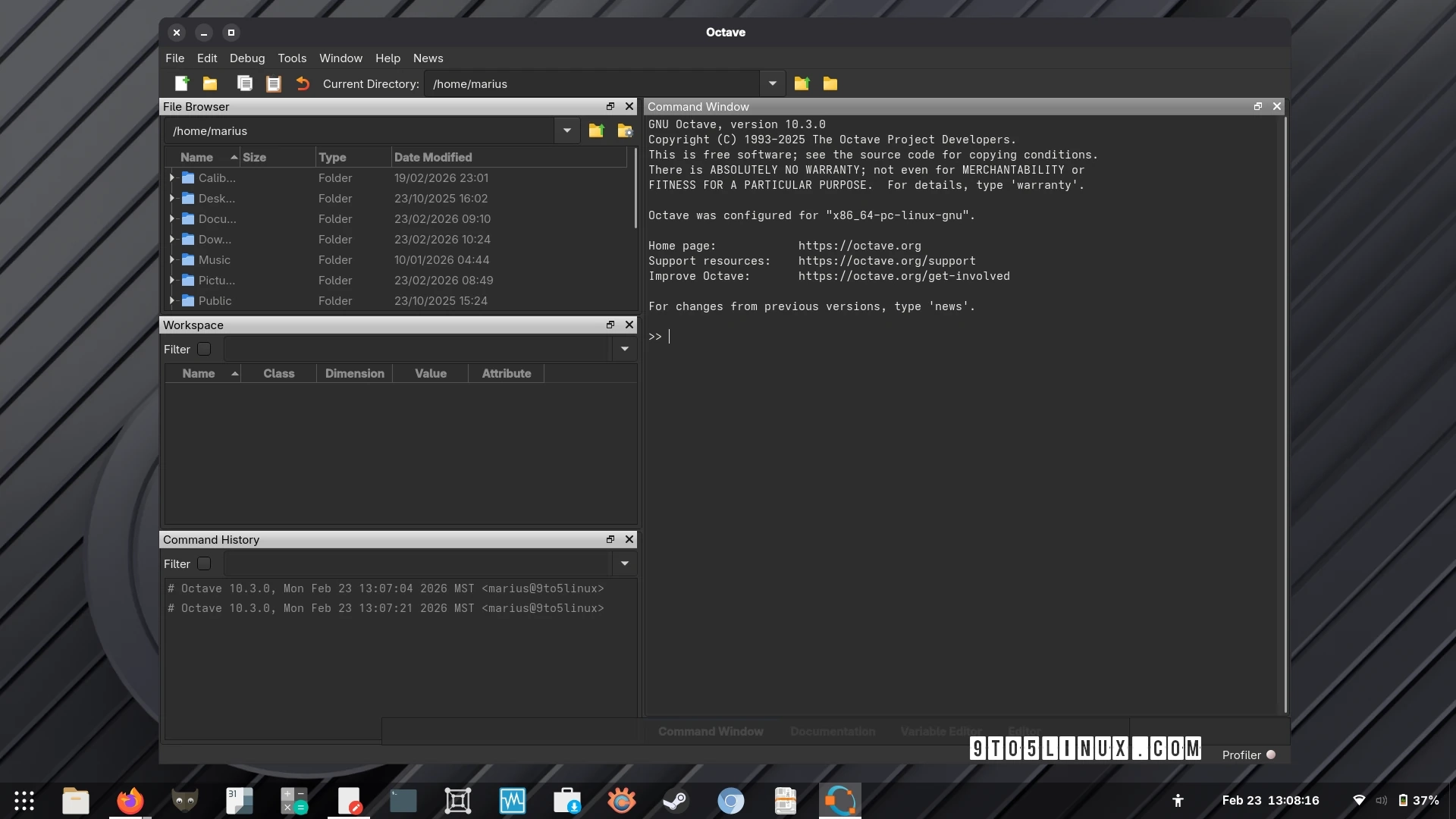
GNU Octave 11 has been officially released as an open-source, high-level language intended for numerical computations. This update brings several enhancements aimed at improving user experience and performance.
Among the notable additions is a new search command that allows users to search the Octave Packages index for relevant packages based on specified keywords in their descriptions. Other updates include a more memory-efficient Java internal interface and a complete overhaul of the randi function.
The roots function has been modified to only accept double or single input types, and the fzero function now provides more accurate results. Additionally, a new _Exit function has been introduced, enabling parallel operations using a fork/_Exit sequence. The sum function now supports increased precision through an "extra" optional argument, applicable even for sparse arrays.
Performance enhancements have been made across several functions, including sum, cumsum, and sumsq, which can now operate up to six times faster with logical inputs. The norm function has also been updated to implement Kahan summation for improved accuracy with single data types.
In terms of user interface, the Octave GUI has seen significant updates, including two tabs on the File Browser for better file management, recent lists for input fields in the Find File dialog, and scalable SVG icons. The overall graphics backend has improved, resulting in up to 25 percent faster PDF printing and enhanced performance for alpha blending through updated OpenGL versions.
GNU Octave 11 aims to enhance compatibility with MATLAB and includes further improvements throughout the application. Users can find more details in the release notes and download the latest version from the official website. You can also install it via your distribution’s repositories or from Flathub.